

What is a face balm? What is it used for? Why you need a face balm!
Balms, moisturizers and face oils. What’s the difference between all these variations?
If your moisturizer stops keeping up the moment the weather turns cold, a face balm may be the step you're missing. Face balms are some of the richest products in skincare, and they work differently from a cream or lotion. Here's what a face balm is, what it does for your skin barrier, which key ingredients matter, and how to choose one for your skin type.
What Is a Face Balm?
A face balm is an oil or butter based product that creates a rich, protective layer on the skin to seal in hydration. Most face balms are anhydrous, which means they contain no water. Instead, the formula is built from plant oils, butters, and waxes that stay solid in the jar and then melt into a silky oil the moment they touch the warmth of your fingertips.
Because there's no water in the formula, anhydrous balms typically use fewer synthetic preservatives than water based products. That concentrated base is also why a face balm is sometimes called a solid serum: it's packed with oils, butters, and actives, with no water to dilute them. A small amount typically provides significant moisture protection, so one jar goes a long way, and the simple jar packaging travels easily.
Balms are known for being ultra hydrating and thick, and a balm is usually the final step in a skincare routine. Its main job is less about adding water to the skin and more about locking in everything you've already applied.
Face Balm vs. Moisturizer vs. Facial Oils: What's the Difference?
Moisturizers usually contain a high percentage of water, with emollients like shea butter and humectants like glycerin or hyaluronic acid mixed in. A moisturizer absorbs quickly and hydrates the top layers of skin, and for normal, combination, or oily skin it's often all you need.
Facial oils are liquid blends of plant oils, typically rich in essential fatty acids, vitamin E, and antioxidants. Facial oils soften and nourish skin without the heavier feel of a moisturizing cream.
Face balms use oils and butters to seal in moisture more than to add water. Balms provide a thicker, more occlusive barrier than a moisturizer, and they can feel waxy or greasy compared to a moisturizer until they melt in.
The National Eczema Association's moisturizer guide sorts products the same way: lotions have the least oil, creams sit in the middle, and ointments have the highest oil content of all. A face balm sits at the ointment end of that scale, which is why it outperforms a lightweight moisturizer on very dry days. The American Academy of Dermatology also notes in its tips for relieving dry skin that ointments and creams are more effective than lotions.
How Beauty Balms Support Your Skin Barrier and Barrier Repair
Your skin barrier is the outermost layer of skin, the part that keeps water in and irritants out. When it's compromised by over cleansing, over exfoliating, or cold wind, water escapes faster and skin responds with tightness, flaking, redness, and irritation.
Beauty balms help in two ways. First, balms create a physical seal over the skin that locks in moisture and slows water loss, which matters most in cold, dry conditions. Second, the fatty acids in plant oils and butters resemble the lipids skin naturally uses to hold its barrier together. A 2017 review in the International Journal of Molecular Sciences examined how topically applied plant oils, including jojoba, rosehip, and sea buckthorn oil, may calm inflammation and support barrier repair. Sealing and replenishing at once is what lets a well formulated face balm help restore a compromised skin barrier.
Common ingredients in effective balms include petrolatum, beeswax, and ceramides. Plant based beauty balms rely on moisturizing botanical oils, butters, and plant waxes to do the same job.
Shea Butter, Seed Oils, and Other Key Ingredients to Look For
Not every balm on the market is built the same. When you read a label, these are the key ingredients worth looking for:
- Shea butter, mango butter, and kokum butter: Rich plant butters that soften rough skin and add a moisturizing cushion. Dry skin benefits most from rich formulas containing shea butter, squalane, and argan oil.
- Seed oils: Macadamia seed oil, meadowfoam seed oil, and kalahari melon seed oil are packed with fatty acids that keep skin soft and supple.
- Rosehip oil, marula oil, and avocado oil: Nourishing oils packed with vitamins and antioxidants that help skin tone look more even and bring back a radiant glow.
- Sea buckthorn oil: A vivid orange oil naturally rich in omega fatty acids, often used in balms made for dull, tired looking skin.
- Frankincense oil: A traditional botanical with a warm, grounding scent.
- Jojoba: Similar in structure to skin's own sebum, so it melts in without feeling heavy or greasy.
- Colloidal oatmeal: A soothing ingredient often found in balms made for itchy, irritated skin or eczema prone skin.
It's just as useful to know which harmful ingredients to skip. If your skin is sensitive, synthetic fragrance or a long list of essential oils may not be worth the risk, and if you break out easily, check for heavy butters that can clog pores.
5 Reasons a Face Balm Is a Skin Savior, From Dry Patches to Fine Lines
1. Overnight recovery. When skin feels parched or fatigued, use a thin layer of balm as the final step at night. Your skin's natural repair cycle kicks in while you sleep, and the balm keeps water from evaporating, so you wake up to dewy, supple skin. No rinsing required.
2. Relief for dry skin and chapped patches. When skin feels dry or irritated, balms can support the skin barrier, soothe irritation, and provide immediate relief to chapped skin. Beyond your face, a balm doubles as a moisturizing body treatment for elbows, knees, hands, and cuticles, keeping those spots soft all winter. Plenty of people keep one in their makeup bag for exactly this reason, and some are formulated for lips too, so check the label.
3. Protection from cold, wind, and dry air. Balms provide a protective layer against cold and dry air and help shield skin from harsh environmental elements like wind and pollution. Whether you're on the slopes or living with indoor heating all winter, a face balm slows water loss when conditions work against you.
4. Softer looking fine lines and wrinkles. Dehydration makes fine lines look deeper. By sealing skin and delivering nourishing oils like rosehip and macadamia, face balms can minimize the look of fine lines and wrinkles and give skin a smoother, more radiant finish. After a long day in the sun, that same nourishing layer helps dry, tight skin feel comfortable again. For after sun care, read our guide to repairing sun damaged skin.
5. A smooth base for makeup. A thin layer smooths dry, flaky patches so foundation and concealer glide on smooth instead of catching. Let it sink in for a few minutes before makeup, and blot any excess if you prefer a less dewy finish.
How to Choose the Best Face Balm for Your Skin Type
Selecting the right balm for your skin type can help avoid clogged pores and gets the most out of every formula.
Face Balm for Dry Skin
Dry skin can use a balm morning and night. Look for rich formulas with shea butter and seed oils, and apply the balm over a hydrating serum or moisturizing cream. For a full routine, shop our dry skin collection.
Face Balm for Mature Skin
As skin ages it loses water faster and can look duller. Look for balms with anti-aging ingredients like rosehip oil and, in some formulas, peptides, plus antioxidant oils like sea buckthorn and frankincense oil for glowing skin. Layer your balm over a targeted serum from our anti-aging skincare products.
Oily, Acne Prone, and Combination Skin
Oily or acne prone skin should choose non comedogenic balms with lightweight oils like jojoba, and use only a thin, gentle layer. Combination skin can benefit from the same kind of balm applied only to drier zones, like the cheeks. Browse our oily skin and combination skin collections to build the rest of your routine.
Sensitive Skin: Fragrance Free or Botanical Scent?
Sensitive skin should use fragrance free, hypoallergenic balms with calming ingredients. Both the National Eczema Association and the American Academy of Dermatology recommend avoiding added fragrance for eczema and very dry, reactive skin. Many botanical beauty balms, ours included, get their scent from essential oils like lavender, which some sensitive skin tolerates and some doesn't. If you have eczema or react to lavender, patch test along your jawline first, or build your routine around a gentle serum like Barrier Bliss. Shop more gentle picks in our sensitive skin collection.
How to Use a Face Balm in Your Skincare Routine
- Cleanse, tone, and apply your serums, then your moisturizer.
- Apply face balm after creams and oils so it seals everything underneath.
- Warm the balm in your hands until it melts into an oil.
- Press and massage it over your face, neck, and décolleté.
- Apply balm to problem areas like dry patches for targeted treatment.
At night, use a thin layer to trap moisture overnight. In the morning, follow your balm with sunscreen, then makeup.
Layering Your Face Balm With Hyaluronic Acid
Since a balm seals rather than adds water, it works best over humectant actives. Apply a hyaluronic acid serum to slightly damp skin, then press your balm on top once it melts to hold it in place. Barrier Bliss is a fragrance free serum with hyaluronic acid and glycerin, and Nano Hydrator is a lightweight moisturizer with hyaluronic acid and avocado oil that layers well under a balm.
Can a Face Balm Replace Your Eye Cream?
The skin around your eyes is thinner than the rest of your face, so a dedicated eye cream or eye balm is the better choice there. Jade Energy is our energizing eye balm with green coffee oil, hemp seed oil, and kahai oil. It's packed with antioxidants and melts on your fingertip. Massage it around the orbital bone, avoiding the eye itself. Shop more in our eye care collection.
Why Blue Butterfly Balm Is One of Our Best Sellers
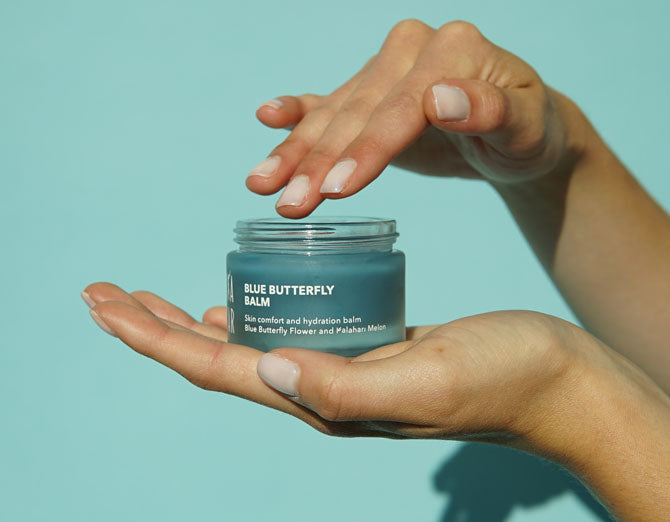
Blue Butterfly Balm is a rich, hydrating face balm that melts in your palm and delivers instant relief and a radiant glow to dry, rough, or irritated skin. It's a best seller for a reason. This solid serum style formula is packed with macadamia, meadowfoam, flax, rosehip, evening primrose, baobab, kalahari melon, and marula oils, layered with shea, mango, and cupuacu butters, butterfly pea flower extract, and vitamin E. It's 98% natural, formulated for 12 to 24 hours of hydration, and designed to reduce visible redness and irritation across normal, dry, combination, acne prone, sensitive, and oily skin. Its only scent comes from geranium, lavender, blue tansy, and frankincense oils. Find it alongside every other best seller in our best sellers collection.
With a 4.9 star average across more than 200 reviews and packaging that slips into any bag, customers keep coming back. One verified buyer, Chloe Z., calls it "my holy grail," adding that it's "naturally absorbing and gives you that effortless glow." Another verified buyer, Alina K., shared that her dry, flaky skin made makeup hard to apply, "but since I started using this it has been smooth sailing."

Blue Butterfly Balm
A rich hydrating balm that melts in your palm to activate its calming aroma and provide instant relief and radiant glow to dry, rough, or irritated skin.
Not sure which balm or moisturizer fits? Take our free skin consultation for a personalized routine.
Face Balm FAQ
What is a face balm for?
A face balm seals in moisture, protects the skin barrier from cold and wind, and calms dry, irritated skin on the face, neck, and body. It's usually the final step in a routine, applied over serums and moisturizer.
Is face balm the same as moisturizer?
No. Moisturizers are mostly water with added emollients, while face balms are typically anhydrous blends of oils and butters. A balm creates a thicker, more occlusive layer, so it's better at preventing water loss than at adding water on its own. Most people use both, with the moisturizer underneath.
What is the best face balm for mature skin?
Look for a rich balm packed with nourishing oils like rosehip, marula, and frankincense oil, plus antioxidants such as vitamin E. Blue Butterfly Balm combines these with plant butters for a soft, smooth finish.
What is the best hydrating face balm?
The most hydrating face balm pairs rich butters like shea with fatty acid rich seed oils, then melts over a hyaluronic acid serum. Blue Butterfly Balm is formulated for 12 to 24 hours of hydration, works across every skin type, and layers over any moisturizer.


